If you travel anywhere in England right now, you'll probably notice a sea of England flags hanging out of people's windows and hear an extra syllable added to the country's name (now known as "Eng-er-land"). This can mean only one of two things: either a nationwide far-right rally has just been organised or there's some sort of football tournament.
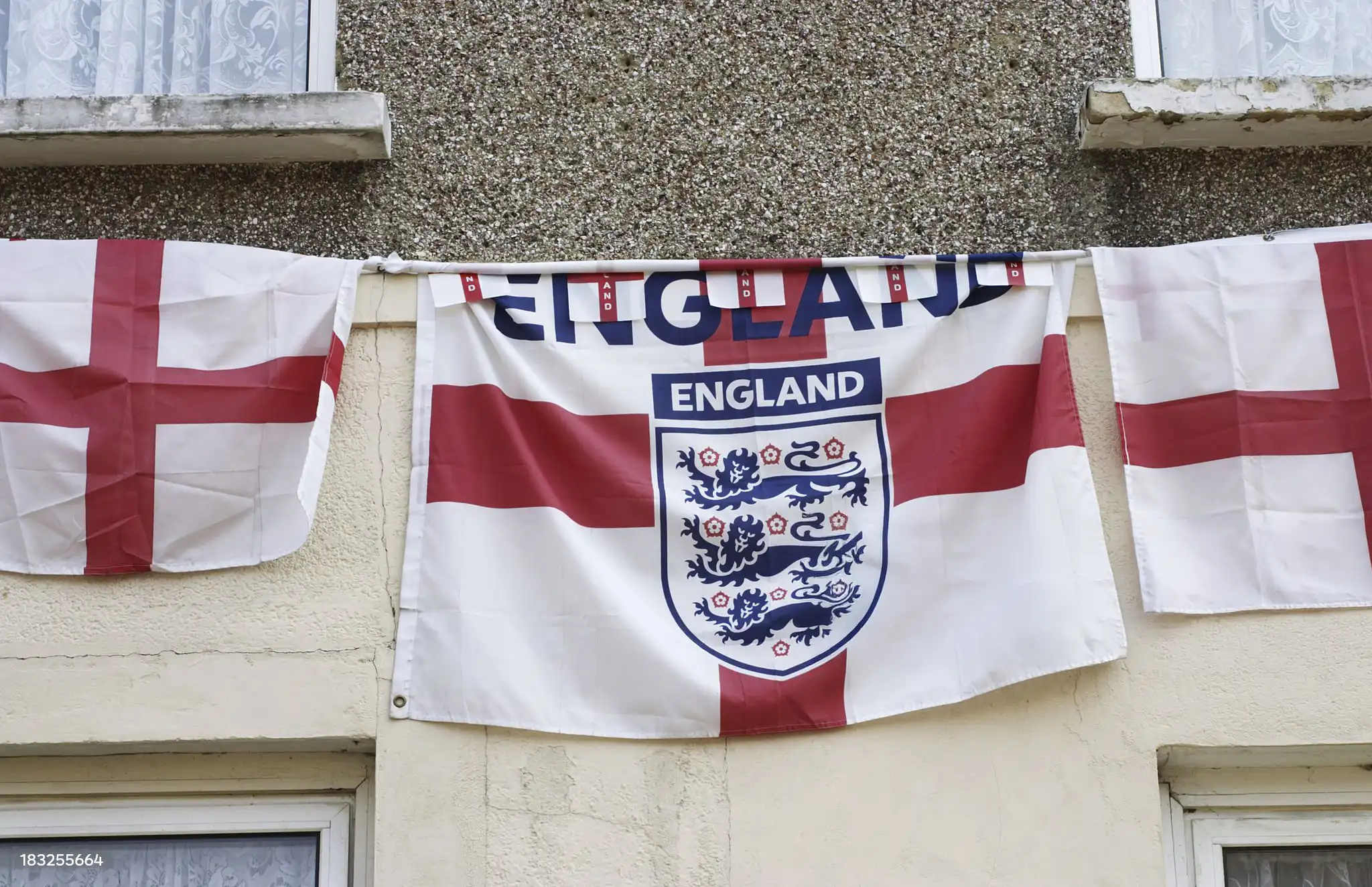
You'd be forgiven for confusing the two. When you see news footage of young to middle-aged white men roaming the streets, hurling bottles of beer wherever they feel like, and shouting slogans with a distinct lack of consonants, it's only natural to think that someone from the Reform party has opened their mouth again and got everyone a bit riled up.
That's exactly what I thought, largely because I had no idea the World Cup was going on. Naturally, this admission recently made me the subject of ridicule amongst my colleagues who couldn't believe that "Dan the Man" was completely oblivious to the biggest global event of the year. They also weren't impressed that I didn't know who a chap called Larry Kane was, or how many "caps" he had. As I explained at the time, I'm afraid this is because I'm just not that bothered about who kicked what ball through what posts, or indeed their hat collection.
Frankly, though, I wear this ignorance like a badge of honour, and I've been training myself on it for a while now. Years of telling my phone to stop recommending any news articles to me that mention "football" (or "soccer"), and reporting any videos that do as "uninteresting" or "offensive" has finally paid off. I've now reached a level of football ignorance I could only have dreamt of.
I'm sorry, but I don't really like football, and for lots of reasons: Firstly, I just don't have the patience for it. I come from the world of F1 fandom where, at any given point, 20 of the worlds best drivers - and Lance Stroll - barrel around corners at 200kmph to the soundtrack of roaring V8 engines. Substituting those £million cars for a ball of leather and a tired Neil Diamond rendition doesn't exactly match up.
I've never really understood how people can endure ninety minutes of people passing a ball backwards and forwards to each other. And as if 90 minutes of that wasn't enough, you then have "injury" time which, so far as I can tell, involves plucking a random number out of thin air, adding it to the timer, and then ignoring it. If, as is usually the case, no-one has scored a goal after all that, you then go onto "extra time" and watch another 30 minutes of nobody scoring a goal.
I find all of this quite strange because the last time I watched a football match - in 1996 - there was something called the "golden goal" (i.e., next goal wins). However, I've been told that this has been abolished because it somehow made things even more boring. Instead, the matches are dragged out for even longer, and - I'm sorry - I'm out. If I wanted to sit through three straight hours of absolutely nothing happening, I'd watch Oppenheimer.
Football isn't exactly the most progressive sport either. Although I don't understand 90% of the rules in rugby, I do know that the referee occasionally relies on a Television Match Official to check video footage of something important they missed rather than just guessing what happened. In tennis, Hawkeye arrived a few years later to accomplish the same thing. However, it took 11 years for Goal Line Technology to surface in football, presumably because the hardcore fans thought it was much better to honour the tradition of having dodgy calls and an excuse to fight about them afterwards.
The lack of sportsmanship in football is also staggering. In snooker, if a player fouls, they own up to it - even if they could have got away with it - and lose potentially thousands in prize money as a result. You don't see an awful lot of that in football. In fact, it's quite normal to look for any possible way you can disadvantage the other team, usually by pretending to be injured by them or wasting time substituting in a player who apparently can't run for the last three minutes of a match.
This doesn't fly in other sports; in rugby, you know someone is injured - usually because part of their head is missing - and they can't waste time messing about because the clock is paused when they do and they'll look a bit silly. In football, you can hurl as much abuse at the referee as your lungs can handle but, if you try talking back to a referee in rugby, they'll send your whole team back across the field and make you write a 3000 word essay on having some manners.
Let me get serious for a moment, because the biggest issue I have with football is what it does to certain people. I'm not talking about lobbing bricks through shop windows and setting bins on fire; I'm taking about something much more serious. According to a study published in the Journal of Research in Crime and Delinquency, when England lose a football match, the likelihood of domestic violence goes up 26%.
No, sorry, I have that wrong: when England win, it goes up 26%. When they lose, it's thought to go up to 38%. And, apparently, this happens a lot. Given the terrible record the men's English football team have, expecting them to actually win anything now is as optimistic as taking a fillet of salmon to the vet. I just cannot understand where this anger comes from or why some people feel the need to take it out on someone else.
Another thing I cannot understand why this is not talked about more often. Honestly, knowing full well that this can happen, football punditry has, I think, a lot to answer for. Every single piece of football coverage should start with a reminder that football is just a game, that it really, really doesn't matter which team wins and, if you could just make it through the evening without assaulting anyone, that would be splendid.
Of course, I'm well aware that not all football fans are beer-swilling maniacs, and I am genuinely delighted that there is an event that can unite lots of different people. However, I do wish that we could find a remedy for football fever and appreciate that a sporting tournament doesn't define who we are as a nation, and that watching one probably isn't more important than going to school or doing your job.
So, please don't be alarmed when you meet someone who doesn't live and breathe football, has no idea what a linesman does, or thinks Gary Linekar's main achievement in life is selling crisps. Not everyone is a football fan, and most of us are actually quite normal.