I really like LinkedIn. The daily puzzles are brilliant; they're challenging, well-designed, and a great way of killing a few minutes each day. It's well worth checking them out if you haven't already.
Oh, but, apparently, LinkedIn is also a social networking site - for professionals. I, like a lot of others, tend to forget this. However, to amuse myself, I do occasionally look at some of the posts made by its avid users - usually in 'management speak' - so I can keep myself updated on what I should "calenderise" to help me "move the needle" and "action those deliverables".
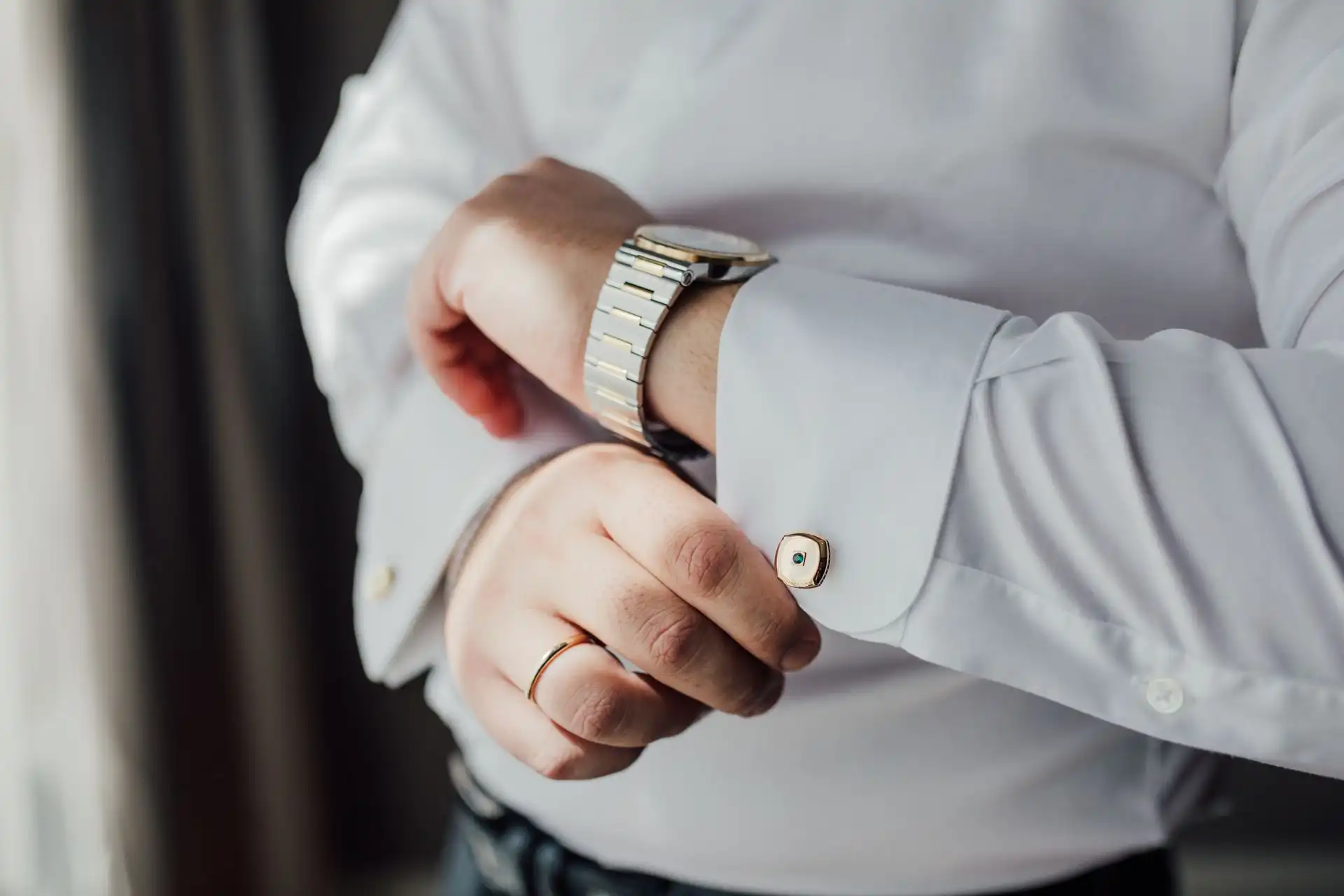
Photo by Faruk Tokluoğlu
Buried within these is a sleuth of posts made by another group of progressive workaholics who want you to know one thing: that it really doesn't matter how you dress for work. Clearly, they feel quite strongly about this and get quite defensive if you disagree, claiming that anyone who has another view on this should "circle back" to where they came from and do a "deep dive" on themselves.
This is quite timely as it seems that some people have indeed forgotten how to dress for work when there isn't a pandemic - much like Amazon delivery drivers have forgotten how to deliver parcels - and that wearing joggers in a boardroom isn't quite the same as wearing them in your living room.
Clearly, then, some people have decided that we should all dress down for work, and we've all just sort of gone along with it. You see it everywhere: estate agents, for instance, no longer dress like they're trying to sell you a house; they dress like they're trying to sell you a kidney. One of my opticians was wearing jeggings (whatever they are) and, at a recent trip to the cinema, so many of the staff were wearing baggy trousers that I thought I was in a music video for Madness.
Even in places where people used to make an effort, they don't. I treated myself with a trip to a nice restaurant recently but, judging by the sea of baseball caps, I could have just gone to the pub. I thought the theatre would have been a sure bet for a bit of class but it was exactly the same. The whole evening may as well have been sponsored by Adidas. Of course, no-one enforces a dress policy at these venues now because, if you dare to point out to people that they should probably lose the trainers on a nice night out, you'll be in receipt of a 1-star review and some Prosecco in your face.
On television, it's no better. News reporters now dress like they're heading off for a BBQ straight after the bulletin and, when I saw candidates on The Apprentice wearing shorts, I turned it off immediately and set fire to my TV licence.
I get that people want to be fashionable and make a statement, but maybe that's something you should do in your own time. After all, this is the exact reason schools have uniforms; to stop a fashion arms race and to help keep people focused while maintaining a level playing field for everyone.
This has worked well for a long time, and no-one seemed to have an issue with it. When I worked at a supermarket, for instance, the uniform was a smart (ironed) shirt and smart trousers. If your uniform wasn't up to scratch, you'd be sent home to make sure it is. However, I imagine that this would never happen now, largely because the criteria for working in a supermarket today is to dress like a sports coach.
More recently, I worked at a place where people actually stood out for looking smart. You could refer to one individual as "the one who always wears a tie". Ten years ago, that would have been a ludicrous thing to say. It's a bit like saying "he's the one who always brushes his teeth".
At this point, people will be getting quite angry and demanding to know why any of this is a problem. They'll be quick to point out that what you wear to work should have absolutely no bearing on how well you can do your job and that people should just be able to wear whatever they like. This would be an excellent point if it weren't completely irrelevant.
No-one's debating that you can input numbers into a spreadsheet as quickly in a hoodie as a waistcoat, what people are debating is how other people perceive you when you're doing it - what image you're projecting to others about your work ethic, whether you're part of a team, and how much you value your own needs over others. Those things, I'm afraid, will affect how people feel about working with you and, ultimately, how well you're able to do your job.
Frankly, I don't care if I have the region's best solicitor working for me. If I'm in a meeting with them while they're wearing shorts and a T-shirt, I'm not going to be able to take them seriously. I'd feel exactly the same if they openly picked their nose in front of me. It's exactly the same attitude of "I don't really care how I appear to you" so "deal with it", and that's not the best way of starting a professional relationship.
The other argument for dressing down at work is that smart clothes are not very comfortable to wear, but that's not really anything new, is it? No-one has ever thought "I'd feel much better today if I wore a tie that feels like it's choking me for eight hours" or "I'll wear a pencil skirt because I'd really like to restrict how much I can move". People don't necessarily wear these clothes because they want to, they do because it sends a simple message: "I'm prepared to make a small sacrifice for others".
And that's the problem. If we're being honest, the real argument against dressing smartly is simple: "but I don't want to". It's not a brilliant argument but now it works. People have learned that they can wear whatever they want because employers don't want to have any awkward conversations with them about how a funsie onesie doesn't set a professional precedent for a meeting, or that their cycling shorts reveal a bit more than the company manifesto.
They're probably also concerned that, if they speak about the unspoken rules about a dress code, people will take to social media to post about their oppressive working environments. So, now, everyone just looks the other way, and we've arrived unceremoniously at an awkward stalemate.
Fortunately, though, this is all excellent news, because it means that, if you really want to stand out in a job interview or give yourself an edge over your competitors, all you really need to do is buy some shoe polish and dig out your iron.
That is, of course, assuming you can actually find smart clothes. It seems that, sadly, some tailors are now struggling for business and are hanging on by a silk thread - and good luck spotting something interview-worthy in a high street store; you'd have more luck spotting a kingfisher.
Don't give up though, because dressing smartly has some huge advantages. First, it helps set up some boundaries and gets you fired up for the start of your working day. Conversely, changing back into casual clothes after a day of work helps create a clear separation between your home and work life.
There's some psychology behind this too. Stacks of research, including some of my own, has shown us that wearing smart clothes can make you feel more confident. Not only this, when we see people in smart clothes (compared to casual clothes), we view them as more confident, professional, trustworthy, and approachable.
So give it a go. March into your office like a character from Suits (not Meghan Markle) and prove to yourself and others exactly how much you're worth. You'll feel super important, project a professional image and, even if it's not immediately obvious, find that lots of people will have an enormous amount of respect for you.